


In our modern lives, the adage “Sitting is the New Smoking” has become increasingly relevant. But beyond this familiar warning lies a more alarming truth: our daily choices significantly impact our health. The combination of prolonged inactivity, indulgence in junk food, smoking, and excessive alcohol consumption can lead to dire consequences. One such consequence is colorectal cancer – an umbrella term for the cancer of the rectum, anus, or colon.
In this blog, we delve into the alarming situation of colorectal cancer in India, its risk factors, prevention strategies, the importance of early detection, colorectal cancer treatment options and the significance of regular screening to keep cancer at bay.
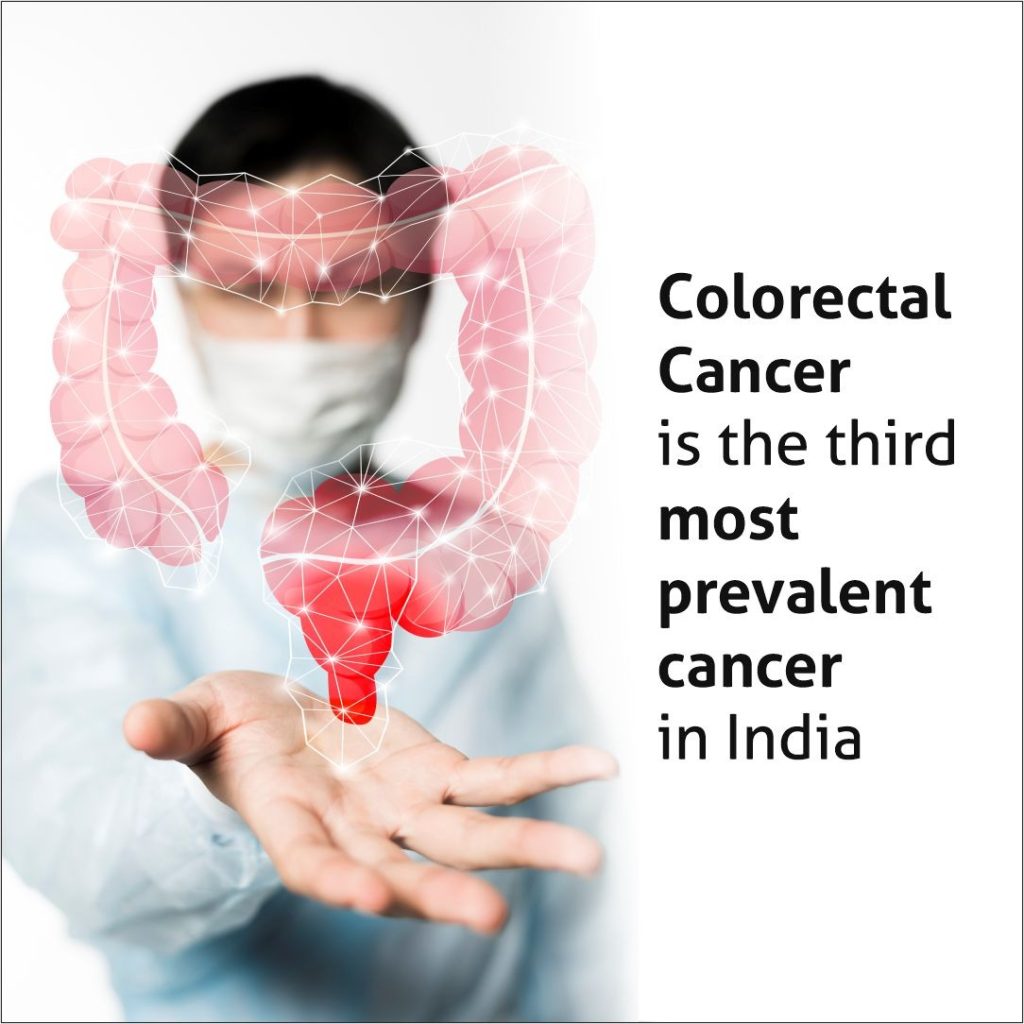
In India, this silent predator ranks as the third most prevalent cancer, accounting for approximately 10% of all cancer cases. Colorectal cancer (CRC) is the fourth most common cancer among Indian men. Although the overall numbers may seem low, considering India’s large population, it’s still a significant concern. Across Indian cancer registries, colon cancer incidence is rising rapidly—increasing by 20% to 124% per year. This trend is worrying. What’s surprising is that the median age of CRC patients in India is 50 years, which is younger than in Western populations.
Often diagnosed in its advanced stages, when treatment options dwindle, the battle against colorectal cancer is both challenging and critical.
While talking on this spectrum Dr. Viraj Lavingia, a Medical Oncologist, at Shalby Hospital says, “Colorectal cancer is a type of cancer that affects the colon (large intestine) or rectum. It can cause major damage if not treated timely. Common colorectal cancer symptoms include diarrhoea, severe constipation, blood loss in stool, abdominal pain for a long time, tiredness, fatigue and low iron levels in the body. But at the same time, many people will not have symptoms at the early stage. Colon cancer is the second leading cause of cancer-related deaths worldwide. In 2020, more than 1.9 million new cases of colorectal cancer and more than 9,30,000 deaths due to colorectal cancer were estimated to have occurred worldwide. Lifestyle modification is one of the ways to prevent it.
Along with adopting a healthy and an active lifestyle, we recommend that individuals with average risk of colon cancer initiate screening around age 45. However, if you fall into the increased risk category, such as having a family history of colon cancer, it’s essential to consider starting screening even earlier. Prioritizing prevention and early detection can significantly impact outcomes for colorectal cancer patients.
Visit best colon cancer treatment hospital in India for regular screening. At Shalby Hospitals, our expert oncologist helps you determine the best approach for your treatment, be it surgery, chemotherapy or radiation. With the increasing number of cancer cases every year, Shalby Cancer and Research Institute (SCRI) aims to provide comprehensive and compassionate cancer care under one roof.

.svg)


Cervical cancer remains one of the most significant health challenges for women in India, but it is also one of the most preventable and treatable forms of cancer. With advancements in medical technology and increased awareness, the landscape of cervical cancer treatment...
Cancer remains one of the most serious health challenges of our time. Every year, millions of people across the world are diagnosed with different types of cancer. While medical science has made remarkable progress in diagnosis and treatment, one truth remains unchanged...

Do you feel constantly tired but dismiss it as stress? Skip meals thinking it won't matter? Believe that beetroot and jaggery are enough to fix your fatigue? You might be unknowingly harming your health by believing common misconceptions about anaemia—one of India's...