




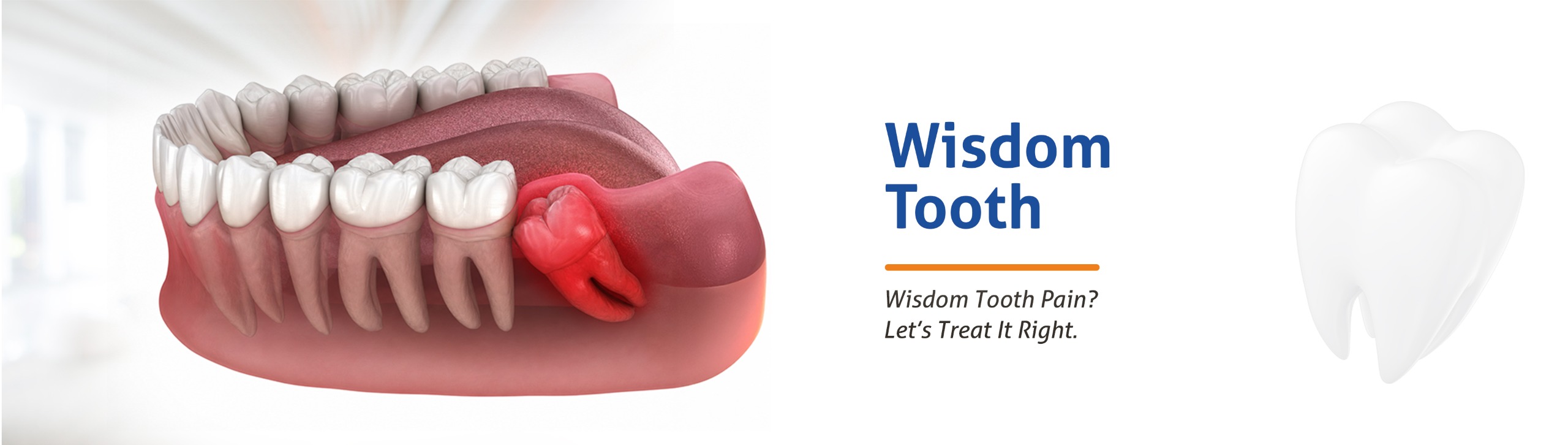
Wisdom tooth pain can make simple things like eating, speaking or opening your mouth uncomfortable. If your wisdom tooth is growing at an unusual angle, remains trapped under the gum or repeatedly causes infection, removal may be recommended to protect your oral health. At Shalby Dental, wisdom tooth removal is approached with careful evaluation, appropriate treatment planning and a focus on patient comfort and safety.
Wisdom teeth are the last permanent teeth to appear at the back of the mouth. They usually emerge during the late teens or early twenties. When there is not enough space for them to grow normally, they may remain partially or completely trapped beneath the gum. This is known as an impacted wisdom tooth. Not every wisdom tooth needs to be removed. If it is healthy, properly positioned and easy to keep clean, your dentist may recommend monitoring it instead.
A wisdom tooth may need to be removed when it causes:
Not every wisdom tooth needs to be removed. Your dentist will first examine the tooth and recommend treatment based on your specific condition.
Your dentist will assess your teeth, gums and symptoms. Dental X-rays may also be used to understand the position of the wisdom tooth and check for problems affecting nearby teeth or surrounding bone. This evaluation helps determine whether the tooth can be monitored or whether removal is appropriate.
The approach depends on the position of the tooth and how difficult it is to remove. For a straightforward extraction, the area is numbed before the tooth is removed. An impacted wisdom tooth may require a surgical approach, which can involve opening the gum and removing a small amount of bone to access the tooth. In some cases, the tooth may be divided into sections for easier removal. The appropriate form of anaesthesia or sedation depends on the procedure and individual circumstances. Your dental team will explain what is suitable for you before treatment.
Some discomfort, swelling or tenderness can occur after the procedure, particularly during the first few days. These symptoms generally improve as the area heals. Your dentist may advise you on:
Following these instructions carefully can support a smoother recovery.
Choosing to remove a wisdom tooth can feel stressful, especially when you are experiencing pain or have concerns about the procedure. Shalby Dental focuses on:
Wisdom tooth problems do not always require immediate removal, but persistent pain or discomfort should be professionally evaluated. Dr. Darshini Shah, Senior Dentist and Head of Department – Dental Cosmetic & Implantology, B.D.S., F.I.C.O.I., ICOI Diplomate (USA), is among the best dentists for personalised wisdom tooth care, offering clear guidance, precise treatment planning and compassionate care based on each patient’s needs.
We aim at spreading smiles of good health, all across the world At Shalby Hospitals, you'll Always be greeted with compassion and patient centric approach to healthcare

A visit to the dentist does not always have to mean drills, vibrations and prolonged...
Read more about Best Laser Dentistry: A Complete Guide to Laser Dental Treatment, Benefits and Cost


