





The knee replacement surgery rebuilds the weight-bearing frontage of a worn-out, damaged, or unhealthy knee joint. The objective is to alleviate pain and bring back mobility. The knee replacement process is a type of arthroplasty, the literal meaning of which is “the surgical repair of a particular joint”. In this procedure, degenerated joints are surgically reconstructed and replaced using human-made artificial parts or prosthetics. With a new knee joint, the patient will experience less or no pain and be able to move around in a few months quickly.
There are three most common reasons for knee replacement surgery:
Osteoarthritis: This is age-related arthritis which is caused by the wear and tear and damage of the knee joint. It generally affects people over 50 years of age, but at times, younger people might also have it. Osteoarthritis is triggered by breakdown, inflammation, and the continuous loss of cartilage present inside the joints. When gradually, the cartilage wears down, the bones start rubbing together, thus causing pain and more friction.
Rheumatoid arthritis: In this case, the membrane surrounding the knee joint becomes thicker and inflamed. Severe inflammation eventually damages the cartilage, resulting in discomfort and stiffness.
Post-traumatic arthritis: This kind of arthritis is caused because of some severe knee injury. If the bones around the area of the knee break or one has had a ligament tear, then this affects the knee cartilage.
When a patient complaints of the following, then he or she is ready for a knee replacement surgery:
Severe stiffness or knee pain that hinders in carrying out daily tasks like walking, climbing stairs, sitting in and out of cars, and getting up from a chair
Persistent, moderate knee pain that doesn’t let a person sleep or rest
Chronic knee inflammation or swelling that is not improving even after medications or resting
Knee deformity, such as a noticeable arch or bow on the inside or outside of the knee
Depressive feelings because of the inability to carry out daily activities. In case all the other treatment options have failed and not provided relief, then surgery might be the best option.
Knee replacement can be either total or partial. In case your knee is damaged due to arthritis, then replacing a part of the joint could bring relief.
Total knee replacement (TKR): In this most common procedure, both sides of the knee joint are replaced with a new artificial knee joint. This surgery takes anywhere between 1 to 3 hours. The patient would feel less or no pain and better mobility after the procedure, however, scar tissue would be there, which could initially make it tough to move or bend the knees.
Partial knee replacement (PKR): In this procedure, only one side of the knee joint is replaced. A smaller portion of the joint or bone is removed; hence, the incision is also lower. The surgery also does not take as long as a total replacement procedure.
PKR is recommended for people who are facing partial damage to just one part of the knee. Rehabilitation post-surgery is faster as the blood loss is lesser, and therefore, there is a lower risk of infection or blood clots. In this case, the hospital stay is also shorter, and the patient could feel more natural movement.
Preparing for the surgery: The knee arthroplasty procedure is major surgery; thus, pre-operative groundwork, consultations, and physical assessments typically start a month before the scheduled date of the surgery. Diagnostic tests like checking blood count, observing how the blood clots, electrocardiograms (ECGs), and routine urine tests are conducted.
Surgery is mostly performed under a general or epidural/spinal anesthetic. In this procedure, the surgeon takes out the damaged cartilage and bone of the knee and then places the artificial implant to restore the proper alignment and movement of the knee.
Recovery
After a knee replacement procedure, the patient is hospitalized for a minimum of 1 to 3 days, subject on how he responds to rehabilitation. The pain persists for a few days, but after a day of the surgery, a physical therapist helps the patient to get up and try walking using some walking aid like crutches or a walker. It is imperative to follow all the instructions of a therapist for a quick recovery.
Regular physical therapy sessions enable strengthening of the knee. In the beginning, these sessions could be painful, but they help in reducing the risk of any complications in the future.
Recovering at home
The American Association of Hip and Knee Surgeons (AAHKS) states that complete recovery after a knee replacement surgery could take about three months. You can drive again after about four to six weeks, and go back to work after a period of six to eight weeks. Mostly, physical therapy sessions are required for about three months. Patients should strictly follow all the instructions given by their doctor and the physical therapist.
The patient should stroll and take all to avoid falling, as that might result in complications or maybe another surgery. You could also take some useful measures such as:
Possible complications in a knee replacement are:
Infection in about 2 percent of the patients
Leg blood clot termed as deep vein thrombosis or DVT
A blood clot in the lungs termed a pulmonary embolism
A fracture or injury during or after the procedure
Nerve damage, resulting in weakness or numbness
Constant pain or soreness
You must consult your surgeon or doctor if you notice any signs or symptoms of an infection or some kind of blood clot. Signs of infection could be fever, swelling, bleeding, redness, draining, or more pain in the affected area. If there is redness, soreness, or inflammation below the knee, or in the ankle, foot, or calf, then this could signify a blood clot in the leg whereas breathlessness or chest pain could indicate a blood clot in the lungs.
The knee replacement cost in India is anywhere between Rs.1,50,000 (approximately $2,200) to Rs.3,80,000 (about $5,500). As compared to many Western countries, the knee replacement cost in India is quite low.
The knee joint replacement cost usually depends on which type of knee replacement is done. The various types of knee replacement costs in India are shown in the table below.
Unilateral Total Knee Replacement
Unilateral Total Knee Replacement
Bilateral Total Knee Replacement
Partial Knee Replacement
Revision Knee Replacement
Indian currency is lesser as compared to other Western currencies like USD, euro, and pounds. Thus, it is more affordable to get knee replacement surgery done in India
There is a vast number of private hospitals in India offering superior treatment. Because of this, the competition between various hospitals is ever-increasing, and therefore, they provide therapy at a reasonable cost
Though the Indian doctors and surgeons are very skilled and experienced and also have international exposure, they comparatively charge less than their colleagues across the globe.
Even the standard of living in India is lower compared to many other developed nations. Thus, the food, traveling, accommodation, and other expenses here are lower as compared to other Western countries.
Most of the knee replacement surgeons in India are highly skilled, qualified, and experienced in conducting complex knee replacement surgeries. The hospitals in India also use the latest techniques, modern treatment, and surgical methods.
Shalby has gained recognition as a multispecialty tertiary hospital chain in India, envisaged by Dr Vikram Shah, its founder and CMD. Ethicon India has felicitated Dr. Shah for developing the ‘OS Needle’. Shalby Hospitals is synonymous with the highest standards of healthcare, and it is an institution offering the best care for its patients at an affordable cost. Shalby Hospitals have India’s best and most experienced doctors, surgeons, and medical staff and state-of-the-art equipment, most advanced technology, and diagnostic competence, which enables gaining precise results in the treatments.

.svg)


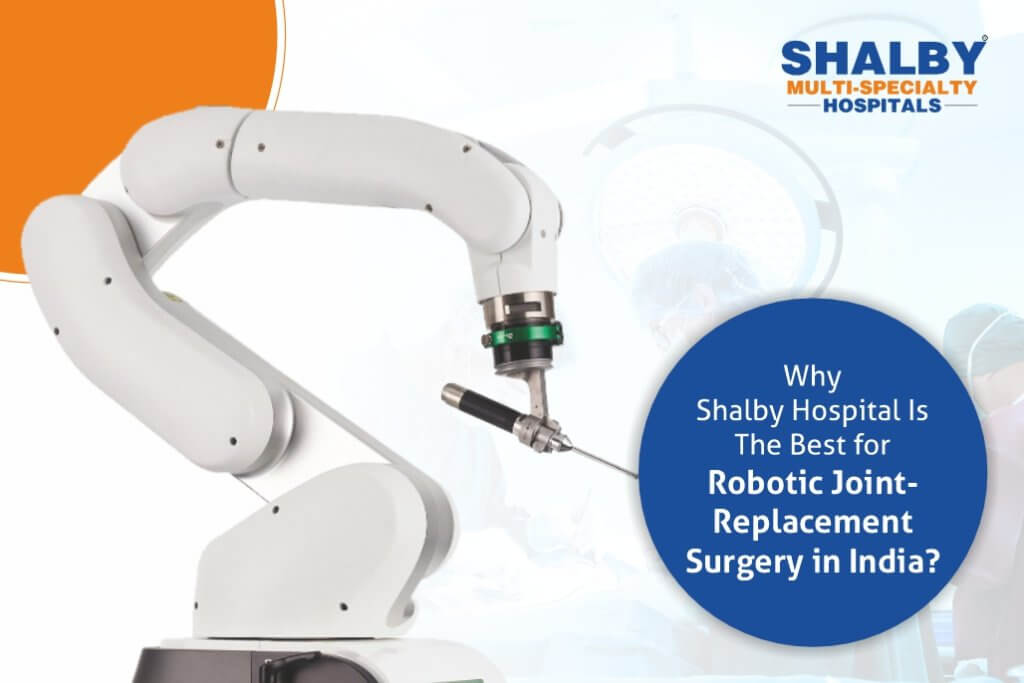
When joint pain begins to affect everyday life—walking, climbing stairs, or even resting comfortably—it can feel physically exhausting and emotionally overwhelming. For many patients, robotic joint replacement has emerged as a reassuring solution, offering precision, safety, and faster recovery. One of the...
For many people, knee pain is more than a medical problem. It affects daily life. Simple activities such as walking, standing for long periods, climbing stairs, or playing with family become difficult. When medicines, physiotherapy, and lifestyle changes no longer provide relief,...

Knee replacement surgery can be life-changing, providing relief to those suffering from chronic knee pain, arthritis, or injury. If you are considering knee replacement surgery in Mohali, it is important to find the best knee replacement surgeons to ensure a successful outcome....


